
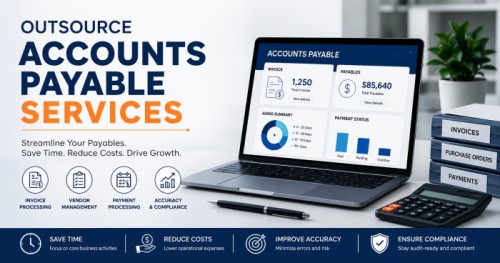
Outsource Accounts Payable Services: Improving Financial Operations Without Expanding Your Team
-
- 0 Share
- 34 Views
Every business has bills to pay, but managing those bills efficiently requires more work than many people realise. From receiving supplier invoices and checking purchase details to tracking approvals and recording transactions, accounts payable involves several steps that need to be handled carefully. When the workload increases, businesses may find it difficult to keep everything moving with a small accounting team. This is one reason companies choose to Outsource Accounts Payable Services to simplify daily financial operations and create a more manageable workflow.
For US businesses, maintaining accurate payable records is essential for understanding expenses, meeting vendor obligations, and planning future payments. A well-organised process can make a difference in how smoothly the finance department operates, particularly when the company is dealing with multiple suppliers and recurring purchases.
The Real Cost of Managing Accounts Payable In-House
Managing accounts payable internally may seem straightforward, especially when transaction volumes are low. However, the process can become expensive in terms of employee time, administrative resources, and operational interruptions.
Accounting staff often need to switch between different tasks throughout the day. They might enter invoice details in the morning, respond to vendor emails, chase approvals in the afternoon, and reconcile outstanding balances before closing the books.
These interruptions make it harder to complete work efficiently. A finance team that spends most of its time processing bills may have limited capacity for financial analysis, budgeting, and reporting.
As businesses grow, they may need to reconsider whether every administrative task should remain in-house or whether certain responsibilities can be handled by an external team.
Understanding the Accounts Payable Outsourcing Process
Outsourcing accounts payable does not mean handing over complete control of company finances. It means assigning agreed accounting responsibilities to an external team while maintaining internal oversight and approval authority.
The process generally includes several stages.
Receiving and Organising Vendor Invoices
Invoices can arrive through email, supplier portals, electronic systems, or other channels. Collecting them in one organised workflow helps reduce the chances of missing documents.
An outsourced team can assist with sorting invoices, identifying essential details, and preparing them for processing. This provides a more consistent starting point for managing business expenses.
Entering Invoice Data Into Accounting Software
Invoice details need to be recorded correctly for the accounting system to reflect business transactions accurately.
This includes vendor names, invoice dates, invoice numbers, amounts, due dates, and expense classifications. Proper recording also helps businesses maintain documentation for future reference.
Reviewing and Verifying Transactions
Before an invoice is approved, it may need to be checked against purchase orders, contracts, or delivery records. This verification helps confirm that the transaction is legitimate and that the billed amount matches the expected purchase.
Any discrepancies can be identified and sent for clarification rather than moving forward without review.
Monitoring Approvals and Payment Status
Invoices may require approval from department managers, business owners, or other authorised employees. Keeping track of pending approvals is important for preventing unnecessary delays.
An outsourced team can maintain invoice status records and follow up on items that require attention. The business can retain final control over payment authorisation and release.
Why Businesses Choose to Outsource Accounts Payable Services
Companies have different reasons for outsourcing, depending on their size and existing accounting structure. However, several advantages are commonly associated with delegating routine accounts payable work.
Making Better Use of Employee Time
Invoice processing is necessary, but it can take employees away from more important responsibilities. By delegating repetitive tasks, internal accounting staff may have more time for reconciliations, financial reporting, expense analysis, and planning.
This is particularly helpful for small businesses where a limited number of employees manage the entire accounting function.
Supporting Growth Without Immediate Hiring
Business expansion often leads to increased transaction volume. More suppliers, additional purchases, and new business locations can create a larger administrative workload.
Outsourcing provides an option for handling these additional responsibilities without immediately recruiting and training another employee. The level of support can be adjusted as the business's requirements change.
Creating a More Organised Workflow
A consistent process for invoice receipt, recording, review, approval, and payment tracking makes accounts payable easier to manage.
When responsibilities are clearly defined, employees know which invoices need attention and where delays are occurring. This can help reduce confusion and improve coordination between accounting, purchasing, and management.
Managing Vendor Relationships Through Better Payment Practices
Vendor relationships are often built through everyday interactions. Suppliers want accurate purchase information, clear communication, and payments made according to agreed terms.
When invoices are overlooked or approvals take too long, vendors may need to follow up repeatedly. This creates unnecessary communication and can affect the company's reputation as a reliable customer.
An organised accounts payable workflow helps businesses track vendor obligations, respond to payment inquiries, and resolve invoice discrepancies more efficiently.
It may also help identify opportunities to take advantage of early payment discounts when the terms and cash position make them worthwhile. Consistent records support better communication when discussing payment arrangements with suppliers.
How Accounts Payable Supports Cash Flow Management
Understanding outgoing payments is just as important as tracking incoming revenue. Businesses need a clear picture of their outstanding bills to make decisions about spending and cash availability.
When payable records are incomplete or outdated, management may overlook upcoming expenses. This can make financial planning more difficult, particularly when several large payments are due within a short period.
Outsourced accounts payable support can help maintain updated records of outstanding invoices, due dates, and payment commitments. These records can be used to prepare reports and review short-term financial obligations.
Better information does not automatically create more cash, but it can help business owners make informed decisions about when and how to manage payments.
Reducing Errors and Improving Record Accuracy
Small mistakes in invoice processing can lead to larger accounting issues. A duplicate entry might cause an unnecessary payment, while incorrect coding could affect expense reporting. Missing documentation may create difficulties during reconciliations or financial reviews.
Businesses can reduce these risks by following a standard invoice review process. This may include verifying supplier details, checking invoice numbers, reviewing amounts, confirming expense categories, and ensuring that approvals are documented.
With outsourced support, companies can assign these recurring responsibilities to a team that follows established procedures. Periodic reconciliations and internal reviews remain important for identifying errors and correcting them promptly.
Technology and Automation in Accounts Payable
Digital accounting tools have made invoice processing more manageable for businesses. Many companies now use cloud accounting software, electronic approvals, automated data capture, and digital storage to organise financial records.
When an outsourced team works within the company's existing systems, invoice information can be updated more consistently. Digital workflows also make it easier to find supporting documents, review invoice status, and monitor outstanding approvals.
Automation can reduce repetitive data entry, but businesses still need people to review unusual transactions, investigate discrepancies, and handle exceptions.
The right technology should make the process easier to oversee rather than create unnecessary complexity.
Security and Financial Control During Outsourcing
Financial outsourcing requires careful handling of confidential business information. Invoices may contain supplier banking details, pricing information, purchase records, and other sensitive data.
Businesses should review the provider's confidentiality policies, access controls, document handling procedures, and data security practices before sharing information.
It is also important to maintain a separation between invoice processing and payment authorisation. The business should establish approval limits, retain appropriate control over fund transfers, and review transactions periodically.
Clear responsibilities and well-defined controls help create a safer outsourcing arrangement.
What to Look for in an Accounts Payable Outsourcing Provider
Choosing a service provider should involve more than comparing prices. Businesses need a partner that understands accounting procedures and can work within their existing financial processes.
Consider the following factors before making a decision:
Relevant experience: Familiarity with invoice processing, vendor reconciliation, and payable workflows.
Software knowledge: Ability to work with the accounting tools used by your company.
Defined service scope: Clear understanding of the responsibilities being delegated.
Reporting quality: Regular updates on processed invoices, outstanding bills, and pending approvals.
Communication: A reliable process for questions, discrepancies, and urgent requests.
Security practices: Appropriate safeguards for confidential financial information.
Flexibility: Ability to accommodate changes in workload and business requirements.
A good outsourcing relationship should make accounting operations easier to manage while keeping the company informed and in control.
Is Outsourcing Accounts Payable Right for Your Business?
Businesses may benefit from outsourcing when invoice processing takes too much time, payment tracking becomes difficult, or internal employees are struggling to keep up with recurring accounting tasks.
It can be a practical option for startups, small businesses, growing companies, and established organisations looking to improve operational efficiency. Some businesses outsource the entire payable workflow, while others delegate only invoice entry, reconciliations, or vendor follow-ups.
The decision depends on transaction volume, internal staffing, business needs, and the level of oversight required.
Creating a More Dependable Accounting Process
Accounts payable is an important part of a company's financial routine. When invoices are organised, payments are tracked, and records are maintained properly, businesses can avoid many unnecessary administrative problems.
Choosing to Outsource Accounts Payable Services can help companies build a more consistent workflow, reduce the burden of repetitive tasks, and provide their internal teams with more time for meaningful financial work.
The most effective approach is one that combines experienced support, suitable accounting technology, clear communication, and strong internal controls. With these elements working together, businesses can manage vendor payments more confidently while creating a financial process that can support their growth over time.
Please