

3PL Logistics Company in India: Key Factors to Check Before Choosing
-
- 0 Share
- 6 Views
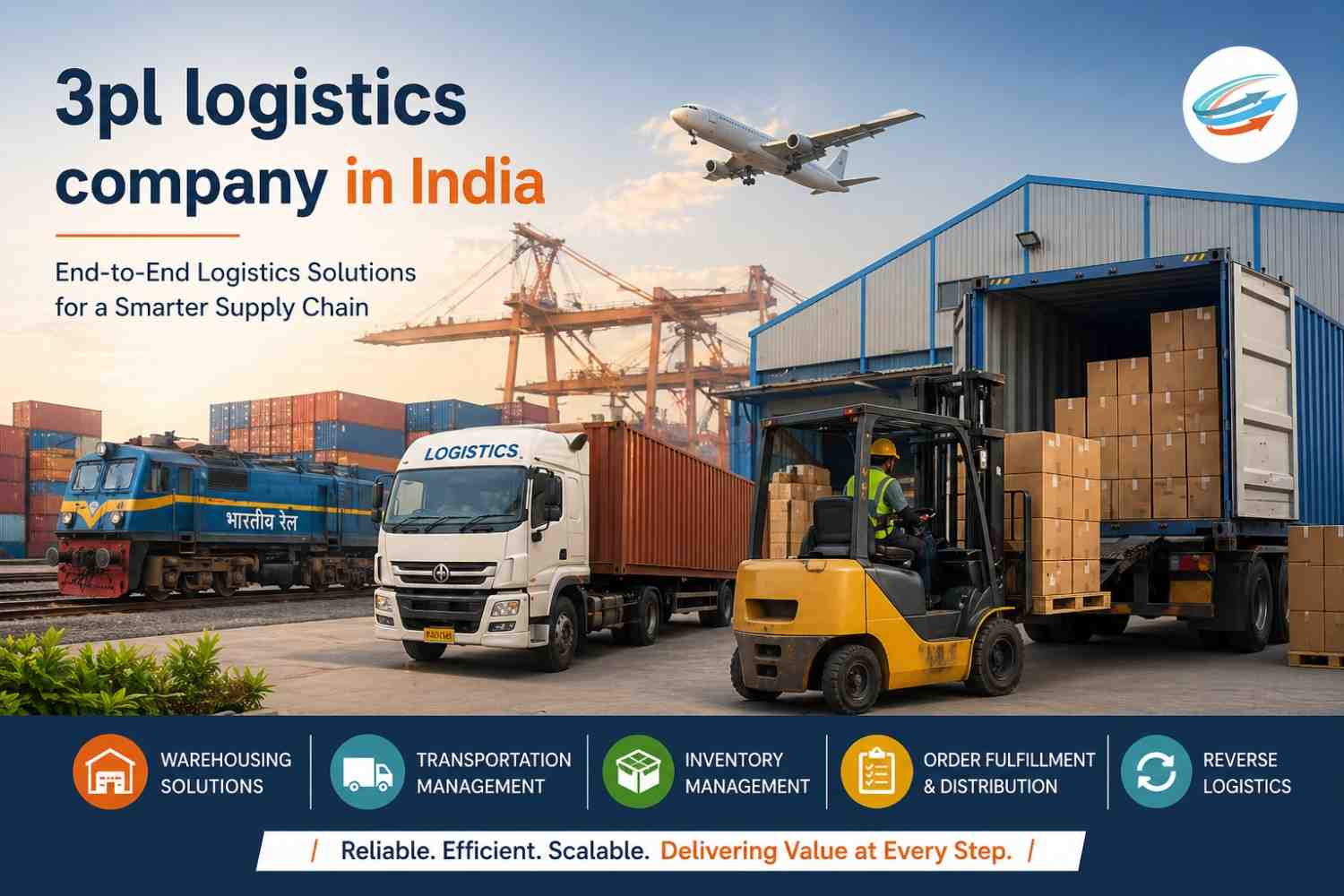
For a logistics team, choosing a 3pl logistics company in India is rarely just about finding someone who can move goods from point A to point B. The harder question is whether the logistics partner can consistently handle what happens between those two points: inventory arriving at the wrong time, orders changing late in the day, warehouse space getting tight, transport capacity becoming expensive, or a customer asking for a delivery update that nobody can answer confidently.
This is where the real value of third-party logistics becomes visible. A good 3PL arrangement should take operational pressure away from the business without creating a new dependency that becomes difficult to manage. In reality, that balance is much harder to achieve than it sounds.
Why 3PL Logistics Services in India Have Become a Business Decision
Indian logistics operations have become increasingly fragmented. A company may purchase raw materials from one region, manufacture somewhere else, hold finished inventory in a separate warehouse, and serve customers spread across several states. The logistics team is then expected to keep all these movements connected while controlling cost.
Doing everything internally can work for a business with predictable volumes and a relatively simple distribution network. Problems usually appear when the business starts growing faster than its logistics infrastructure. Hiring warehouse staff, arranging vehicles, managing storage, tracking inventory, handling documentation, and dealing with multiple transport vendors can quietly consume a large amount of management time.
This is why many companies look at a third party logistics service provider when logistics stops being a supporting function and starts affecting the wider business.
There is another practical issue that often gets missed. Logistics costs do not always increase in proportion to shipment volume. A company can double its orders but still struggle to negotiate efficient transportation because the additional volume is spread across different routes, delivery frequencies, and customer requirements. A 3PL partner with an established network may be able to handle that variability more efficiently than a company building every capability from scratch.
What a 3PL Logistics Company in India Should Actually Handle
A 3PL relationship becomes useful when the provider takes responsibility for connected logistics activities rather than acting as a simple transporter.
Depending on the business model, this can include warehousing, inventory handling, order processing, transportation coordination, dispatch planning, reverse logistics, and distribution support. The exact combination matters. A manufacturer with bulk B2B shipments does not have the same requirements as an eCommerce business processing hundreds of smaller orders every day.
This is one reason I would be cautious about comparing providers only on a rate card. Two companies can quote similar transportation prices while offering completely different operational capabilities.
For example, imagine a distributor holding stock in a regional warehouse. If orders are frequently released in smaller batches, warehouse picking and dispatch coordination become just as important as the transportation itself. A cheaper transport rate does not help much if orders sit waiting for consolidation or inventory records are consistently out of sync.
A capable partner should therefore fit into the company's existing operating rhythm. That means clear handoffs, defined responsibilities, usable reporting, and a process for dealing with exceptions. The last part is particularly important. Routine shipments are easy for almost every provider. The real test is what happens when something goes wrong.
Affordable 3PL Logistics Solutions Are Not Always the Cheapest Option
The phrase affordable 3PL logistics solutions can be misleading if affordability is judged only by the lowest quoted price.
Suppose a company chooses a warehouse because its storage rate is lower. Later, it discovers additional charges for handling, loading, unloading, documentation, inventory movement, or special dispatch requirements. The original comparison suddenly looks very different.
The same thing happens with transportation. A low base freight rate may not remain attractive when shipment sizes vary or when urgent movements require separate arrangements.
A better approach is to examine the total operating cost. That includes storage, handling, transportation, inventory losses, rework, administrative effort, delays, and the cost of maintaining internal logistics infrastructure.
Honestly speaking, this is where many businesses struggle. They compare individual service prices instead of calculating what the complete logistics process costs them.
An effective 3PL arrangement should make costs more predictable without sacrificing the operational flexibility the business actually needs. That does not necessarily mean every shipment will be the cheapest possible shipment. It means the overall system should make commercial sense.
End-to-End 3PL Logistics Services Need Strong Coordination
End-to-end 3PL logistics services sound attractive, but the important word is not "end-to-end". It is coordination.
A logistics operation can have excellent warehousing and still perform poorly if transportation planning is disconnected from inventory availability. Likewise, reliable transportation cannot compensate for inaccurate stock records or inefficient order processing.
The strongest 3PL setups connect these activities. Inventory information influences replenishment. Order patterns influence warehouse planning. Shipment volume influences vehicle selection. Delivery requirements influence dispatch schedules.
Consider a business that receives a large customer order late in the afternoon. If the warehouse team, transport coordinator, and account team work from separate information, the order may technically be accepted but still miss the practical dispatch window. That creates a problem that no single department can solve alone.
A well-managed 3PL process reduces these gaps by establishing who does what and when. It also creates a clear escalation path for exceptions. This sounds administrative, but in day-to-day logistics, these small process details often determine whether operations run smoothly.
The Right Provider Depends on the Logistics Problem
There is no universal definition of the "best" 3PL partner. The right provider depends heavily on what the business is struggling with.
A manufacturer may care more about bulk storage, plant-to-warehouse movement, scheduled transportation, and inventory accuracy. A retailer may be more concerned with regional distribution and replenishment frequency. An eCommerce operation may need order processing, parcel movement, returns handling, and delivery visibility.
This is why businesses should define the problem before approaching a 3pl logistics company in India.
A useful evaluation should consider:
What part of the current logistics process is causing the most cost or delay?
Does the provider have the operational capability for the required shipment profile?
How will inventory, dispatch, and delivery information be shared?
What happens when a shipment misses its planned movement?
Are pricing and additional handling charges clearly understood?
The final question deserves more attention than it usually gets. A contract may look straightforward until unusual operational requirements start generating extra costs. Businesses should understand those conditions before implementation, not after the first invoice arrives.
Technology Helps, but It Does Not Fix a Weak Process
Technology has changed how 3pl logistics services in India can be monitored. Shipment tracking, warehouse management systems, inventory dashboards, digital proof of delivery, automated notifications, and reporting can provide much better visibility than manual coordination.
But technology is not a substitute for process discipline.
If inventory is entered incorrectly, a dashboard will simply display inaccurate information more efficiently. If responsibilities between the business and 3PL provider are unclear, adding another software platform rarely solves the underlying problem.
The useful question is not whether a provider has advanced technology. It is whether that technology gives the logistics team information they can actually use.
For a logistics manager, knowing that an order has been dispatched is useful. Knowing why it was dispatched late, where the delay occurred, and whether the same issue is repeating across a route is far more valuable.
This distinction becomes increasingly important as businesses scale.
What Changes for Logistics Teams in 2026
The 2026 logistics environment is likely to put greater emphasis on visibility, flexible capacity, data quality, and faster decision-making. Businesses are becoming less comfortable with logistics processes that depend heavily on phone calls, spreadsheets, and individual vendor relationships.
At the same time, outsourcing does not remove responsibility from the logistics team. It changes the nature of that responsibility.
Instead of managing every vehicle or warehouse activity directly, internal teams increasingly need to manage performance, service levels, exceptions, cost trends, and partner accountability.
That is a healthier way to look at third-party logistics. The 3PL provider handles agreed operational activities, while the business retains control over the commercial outcomes.
The companies that benefit most are usually not the ones that outsource everything. They are the ones that understand which logistics activities are strategically important to keep internally and which can be managed more effectively by a specialist partner.
Conclusion
Selecting a third party logistics service should not begin with the question, "Who offers the lowest rate?" It should begin with a much more useful question: "Where is our current logistics operation losing time, money, visibility, or control?"
Once that is clear, comparing providers becomes easier.
The right 3PL partner should fit the shipment profile, warehouse requirements, geographic reach, technology needs, and growth plans of the business. More importantly, the operating relationship should remain workable after the initial implementation period, when real orders, exceptions, seasonal pressure, and unexpected changes start testing the system.
For logistics teams, that is the real measure of a successful 3PL partnership. Not simply whether goods move, but whether the entire process becomes easier to manage and more predictable as the business grows.
FAQs
1. What does a 3PL logistics company in India do?
Ans. A 3PL provider can manage selected logistics functions such as warehousing, transportation, inventory handling, order processing, and distribution. The exact scope depends on the business's operational requirements and the agreed service model.
2. When should a business consider using a 3PL provider?
Ans. A business should consider 3PL when logistics operations are consuming significant internal resources, becoming difficult to scale, or creating problems with storage, transportation, inventory control, or distribution. Outsourcing can be particularly useful when volumes or delivery locations become more complex.
3. Are affordable 3PL logistics solutions always the cheapest option?
Ans. No. A low quoted rate may exclude handling, storage, special transportation, or other operational charges. Businesses should compare the complete logistics cost rather than focusing on one service rate.
4. What should I check before choosing a third party logistics service provider?
Ans. Check the provider's experience with your shipment type, warehouse and transportation capabilities, reporting process, pricing structure, escalation procedures, technology, and ability to handle changes in volume. References or performance records can also help validate the provider's actual capabilities.
5. What are end-to-end 3PL logistics services?
Ans. End-to-end services cover multiple connected logistics activities rather than only transportation. Depending on the arrangement, this may include warehousing, inventory management, order processing, dispatch coordination, transportation, delivery, and reverse logistics
Please