
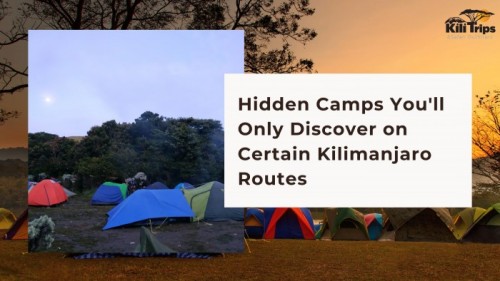
Hidden Camps You'll Only Discover on Certain Kilimanjaro Routes
-
- 0 Share
- 168 Views
Most people planning Mount Kilimanjaro Climbing Routes spend hours comparing summit success rates, route difficulty, trekking days, and scenery. These are all important factors, but there's another detail many first-time climbers overlook—the mountain camps where you'll spend your nights.
Your choice of route doesn't just determine how you reach the summit. It also decides where you'll wake up, where you'll watch the sunset, the people you'll meet, and the landscapes you'll experience after each day's climb.
Some camps are shared by several routes and can feel lively with trekkers from around the world. Others remain surprisingly quiet, visited only by those following specific paths up Africa's highest mountain.
These lesser-known camps often become some of the most memorable parts of a Kilimanjaro expedition.
Why Camps Matter More Than Most Climbers Expect
When people imagine climbing Kilimanjaro, they usually think about reaching Uhuru Peak.
Very few think about where they'll spend six or seven evenings before summit night.
Yet mountain camps shape your daily experience.
They become places where you:
- Rest after long trekking days.
- Share meals with fellow climbers.
- Watch changing weather.
- Listen to stories from mountain guides.
- Prepare mentally for the next day's climb.
Every camp has its own atmosphere, surroundings, and character.
Choosing different Mount Kilimanjaro Climbing Routes means discovering different sides of the mountain.
Forest Camps That Feel Hidden From the World
The lower slopes of Kilimanjaro are covered by dense rainforest.
Depending on your chosen route, your first camp may feel completely different from someone climbing another trail.
Along quieter routes such as Umbwe, camps often feel more peaceful because fewer trekking groups pass through them.
Instead of hearing dozens of conversations from nearby tents, you may hear birds calling through the forest or rain falling gently across the trees.
These early camps remind climbers that Kilimanjaro isn't only about volcanic landscapes and glaciers.
The rainforest is just as important to the mountain's identity.
Barranco Camp: A Meeting Point With Incredible Views
Unlike some camps that belong almost exclusively to one route, Barranco Camp welcomes trekkers arriving from several directions.
By the time climbers reach Barranco, they've usually spent several days adjusting to altitude.
The scenery changes dramatically.
Towering cliffs rise above the camp while giant senecio plants create one of Kilimanjaro's most distinctive landscapes.
Many experienced climbers consider Barranco one of the mountain's most beautiful overnight stops—not because it's hidden, but because it offers a completely different atmosphere from the forest camps below.
Even travelers following different Mount Kilimanjaro Trekking itineraries often share stories here before continuing toward separate sections of the mountain.
Karanga Camp: The Quiet Pause Before Higher Altitude
Karanga Camp often feels calmer than larger camps lower on the mountain.
For many trekkers, this is where the expedition begins to slow down.
Guides encourage climbers to rest, hydrate, and allow their bodies to continue adapting to the increasing elevation.
The surrounding landscape has changed completely by this stage.
The rainforest is gone.
Vegetation becomes sparse.
Open views stretch across the mountain.
Many climbers spend the evening watching clouds move below them for the first time.
It's a simple moment, but one that often stays in people's memories long after the expedition ends.
Arrow Glacier Camp: One of Kilimanjaro's Lesser-Known Stops
Not every Kilimanjaro route includes Arrow Glacier Camp.
That's one reason it feels different.
Located at higher elevation on the western side of the mountain, this camp is associated with specific itineraries and isn't experienced by every climber.
Its remote setting creates a stronger feeling of isolation compared with some of the busier camps elsewhere on Kilimanjaro.
For experienced trekkers seeking quieter Kilimanjaro Climbing Packages, camps like Arrow Glacier often add to the appeal of less crowded routes.
School Hut: The Final Night Before the Summit
School Hut isn't hidden geographically.
It's hidden by itinerary.
Only climbers following certain northern routes spend the night here before attempting Uhuru Peak.
The atmosphere is unlike anywhere else on the mountain.
Conversations become quieter.
Equipment is checked one last time.
People prepare mentally for the long summit night ahead.
Everyone knows the next time they leave the camp, they'll be walking toward the highest point in Africa.
Whether you're nervous, excited, or simply tired, School Hut creates a sense of anticipation that's difficult to describe until you've experienced it yourself.
Camps Tell the Story of the Mountain
Every day on Kilimanjaro introduces a different landscape.
The camps reflect that journey.
You may begin surrounded by rainforest.
A few days later you're sleeping among giant volcanic rocks.
Eventually you're camping in alpine desert where vegetation almost disappears.
Each overnight stop becomes another chapter in the expedition.
The mountain doesn't suddenly transform at the summit.
It changes gradually, one campsite at a time.
Why Quieter Camps Appeal to Experienced Trekkers
Some climbers enjoy the lively atmosphere of popular camps where they can meet people from around the world.
Others prefer something different.
Smaller camps often provide:
- More peaceful surroundings.
- Better opportunities for photography.
- Less noise after sunset.
- A stronger connection with nature.
- A greater sense of wilderness.
Neither experience is better.
It simply depends on the type of adventure you're looking for.
Many experienced trekkers intentionally choose quieter Mount Kilimanjaro Climbing Routes because they value solitude as much as the summit itself.
Does Your Route Influence the Overall Experience?
Absolutely.
Two people may reach Uhuru Peak on the same morning.
Yet their journeys can feel completely different.
One climber may have spent several nights in busy camps with large trekking groups.
Another may have walked quieter trails, stayed in smaller camps, and experienced a very different atmosphere.
The destination remains the same.
The journey changes.
That's why selecting a Kilimanjaro route shouldn't be based only on summit statistics.
The experience between camps often becomes the part travelers remember most.
Beyond the Summit: Every Camp Has a Story
Ask experienced climbers about Kilimanjaro months after they return home.
Many don't immediately talk about reaching Uhuru Peak.
Instead, they remember:
The evening clouds rolling over Barranco.
The silence around Karanga.
The conversations shared inside dining tents.
The stars above School Hut.
The laughter after difficult trekking days.
These memories are created in camp—not on the summit.
The mountain's highest point may last a few minutes.
Life between the camps lasts several unforgettable days.
Choosing the Right Route for the Experience You Want
Every Kilimanjaro route offers something unique.
Some prioritize gradual acclimatization.
Others focus on scenic diversity.
Some attract larger numbers of trekkers, while others provide a quieter mountain experience.
When comparing Kilimanjaro Climbing Packages, ask questions beyond cost and duration.
Consider:
- How busy are the camps?
- Which landscapes will you experience?
- How many nights are spent on the mountain?
- Which route best matches your expectations?
The answers often shape your experience more than you expect.
Why KiliTrips Helps You Choose the Right Route
At KiliTrips Tanzania, we believe climbing Kilimanjaro isn't simply about reaching the summit.
It's about enjoying every stage of the journey.
Whether you're interested in quieter camps, scenic landscapes, better acclimatization, or combining your trek with Adventure Travel in Tanzania or Tanzania Wildlife Safaris, choosing the right route is the first step toward an unforgettable expedition.
Every climber has different goals.
Your route should reflect them.
Final Thoughts
The hidden beauty of Kilimanjaro isn't found only at Uhuru Peak.
It's discovered in the places where you stop, rest, and watch the mountain change around you.
From peaceful rainforest camps to remote alpine shelters, each overnight stop reveals a different side of Kilimanjaro that many travelers never expect.
Before choosing among the many Mount Kilimanjaro Climbing Routes, remember that you're not only selecting a path to the summit.
You're choosing the places where your mountain story will unfold.
And sometimes, the camps you never knew existed become the memories you treasure the most.
Please