
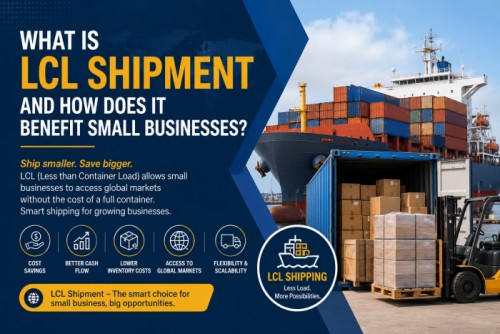
What Is LCL Shipment and How Does It Benefit Small Businesses?
-
- 0 Share
- 43 Views
In today's global marketplace, businesses of all sizes have access to international suppliers and customers. However, shipping goods across borders can be expensive, especially for small businesses that do not have enough cargo to fill an entire shipping container. This is where LCL shipment becomes a valuable logistics solution.
LCL, or Less than Container Load, allows multiple businesses to share space in a single shipping container, making international freight more affordable and accessible. For small and medium-sized enterprises (SMEs), LCL shipping provides a cost-effective way to import and export goods without the need for large inventory commitments.
What Is LCL Shipment?
LCL shipment stands for Less than Container Load. It is a type of ocean freight service where cargo from multiple shippers is consolidated into one container. Each shipper pays only for the space their goods occupy rather than the cost of the entire container.
For example, if a business only needs to ship a few pallets of products, renting a full container would be inefficient and costly. With LCL shipping, those pallets are combined with cargo from other businesses heading to the same destination, significantly reducing transportation expenses.
LCL shipping is commonly used by businesses that ship smaller volumes of goods, startups entering international markets, and companies testing new products before committing to larger orders.
How Does LCL Shipping Work?
The LCL shipping process involves several key steps:
1. Cargo Collection
The shipper prepares and delivers goods to a consolidation warehouse where shipments from different businesses are gathered.
2. Consolidation
A freight forwarder or logistics provider combines multiple shipments into a single container based on destination and shipping schedules.
3. Ocean Transportation
The consolidated container is loaded onto a vessel and transported to the destination port.
4. Deconsolidation
Upon arrival, the container is unloaded, and individual shipments are separated at a destination warehouse.
5. Final Delivery
The cargo is delivered to the consignee or picked up for further distribution.
This process enables businesses to access international shipping services without bearing the cost of a full container.
Key Benefits of LCL Shipment for Small Businesses
Cost Savings
One of the biggest advantages of LCL shipping is reduced transportation costs. Small businesses only pay for the container space they use, making international trade more affordable.
Instead of waiting until enough products accumulate to fill an entire container, businesses can ship smaller quantities while keeping logistics expenses under control.
Improved Cash Flow
Purchasing large inventory volumes often ties up significant capital. LCL shipping allows businesses to order smaller quantities more frequently, reducing the need for substantial upfront investments.
This flexibility helps improve cash flow and enables companies to allocate resources to marketing, product development, and business growth.
Lower Inventory Costs
With LCL shipping, businesses can replenish inventory as needed rather than storing large quantities in warehouses.
This approach minimizes storage expenses, reduces the risk of excess inventory, and helps businesses respond more effectively to changing customer demand.
Access to Global Markets
Many small businesses hesitate to expand internationally because of shipping costs. LCL shipment removes this barrier by making international logistics more accessible.
Businesses can source products from overseas suppliers and serve customers in different countries without requiring large shipment volumes.
Greater Flexibility
LCL shipping provides flexibility for businesses that experience seasonal demand fluctuations or irregular shipping schedules.
Instead of waiting to accumulate enough goods for a full container, companies can ship products whenever necessary, ensuring a more responsive supply chain.
Ideal for Startups and Growing Businesses
New businesses often lack the shipping volume required for Full Container Load (FCL) services. LCL shipping allows startups to begin international trading without large logistics commitments.
As the business grows, shipping volumes can gradually increase until transitioning to full-container shipments becomes economically beneficial.
LCL vs FCL Shipping
Understanding the difference between LCL and FCL shipping can help businesses choose the right logistics solution.
LCL (Less than Container Load)
- Multiple shippers share one container.
- Businesses pay only for the space they use.
- Suitable for smaller shipments.
- Lower upfront shipping costs.
- Ideal for startups and SMEs.
FCL (Full Container Load)
- One shipper uses the entire container.
- Higher shipping cost but potentially lower cost per unit.
- Suitable for large shipment volumes.
- Faster handling since cargo does not require consolidation.
- Ideal for established businesses with consistent shipping needs.
For small businesses shipping limited quantities, LCL is often the more practical and economical option.
Challenges of LCL Shipping
While LCL shipping offers many benefits, businesses should also be aware of potential challenges.
Longer Transit Times
Because shipments require consolidation and deconsolidation, LCL cargo may take slightly longer to reach its destination compared to FCL shipments.
Additional Handling
Since cargo is handled multiple times during consolidation and unloading, proper packaging is essential to protect goods from potential damage.
Variable Costs
LCL shipping costs can fluctuate based on cargo volume, destination, port fees, and seasonal demand.
Working with an experienced logistics provider can help businesses manage these factors effectively.
Tips for Successful LCL Shipping
To maximize the benefits of LCL shipment, businesses should:
- Use strong and secure packaging.
- Label shipments clearly and accurately.
- Plan shipments in advance to avoid delays.
- Work with reputable freight forwarders.
- Ensure all shipping documentation is complete and accurate.
- Monitor shipments using cargo tracking tools.
These practices can help ensure smooth and efficient transportation.
Conclusion
LCL shipment is an essential logistics solution for small businesses seeking affordable access to international markets. By allowing multiple shippers to share container space, LCL shipping reduces transportation costs, improves cash flow, minimizes inventory expenses, and provides greater supply chain flexibility.
Whether a company is importing products from overseas suppliers or exporting goods to international customers, LCL shipping offers a practical and scalable way to participate in global trade. For startups and growing businesses, it serves as an effective stepping stone toward expanding operations while keeping logistics costs manageable and efficient.
Please